


Winter Riding Guidelines

Our indoor arena offers shelter from wind but no heat, so dressing correctly is key.
Layering Tips
Base Layer: Fitted thermal or long-sleeve shirt.
Mid Layer: Fleece or sweatshirt.
Outer Layer: Warm but fitted jacket that doesn’t restrict movement or catch on tack.
Vests: A vest is one of the best winter riding layers. It keeps your core warm while freeing your shoulders for better movement.
Bottoms: Leggings or thermals under jeans or insulated riding pants.
Feet: Thick socks and insulated boots (if specifically suited for riding). No riding in thick winter chore/pack boots.
Hands & Head: Gloves with good grip, thin ear covers, or a hat liner under your helmet. Avoid bulky items that limit control or visibility.
Extras: Hot Hands or pocket warmers are fine as long as they don’t interfere with safety.
How Cold Air Affects Horse Lungs
Cold, dry air directly impacts a horse’s respiratory system.
When a horse inhales cold air, moisture evaporates from the lining of the lungs and nasal passages, which can cause irritation and inflammation.
Prolonged or intense exercise in cold air can lead to coughing, airway sensitivity, and reduced oxygen intake.
Below about 20°F, airway constriction becomes more likely.
Slow, gradual warmups and cooldowns help airways adjust to the cold and reduce stress on the lungs.
Sweating, Warmup, and Cooldown
Horses can and do sweat in winter, but sweating in cold air poses serious risks.
When a horse sweats, moisture trapped in its thick winter coat takes much longer to dry.
A damp coat can cause the horse’s body temperature to drop quickly after exercise, increasing the risk of muscle stiffness, chills, or respiratory illness.
Always allow a slow warmup of 10–15 minutes at a walk and easy trot to prepare muscles and lungs.
After riding, cool down fully before blanketing or turnout. Walk until breathing returns to normal and the coat is only slightly damp.
Use a cooler or towel to wick away sweat and keep the horse covered while drying.
Avoid heavy work or speed events that create excessive sweat when the temperature is below freezing.
A thorough warmup and cooldown not only protect the lungs and muscles but also help prevent illness and discomfort. Winter riding should be steady, safe, and respectful of how long it takes both horse and rider to recover in the cold.
Student Health and Preparedness Policy — New for Winter 2025
To keep everyone healthy and safe:
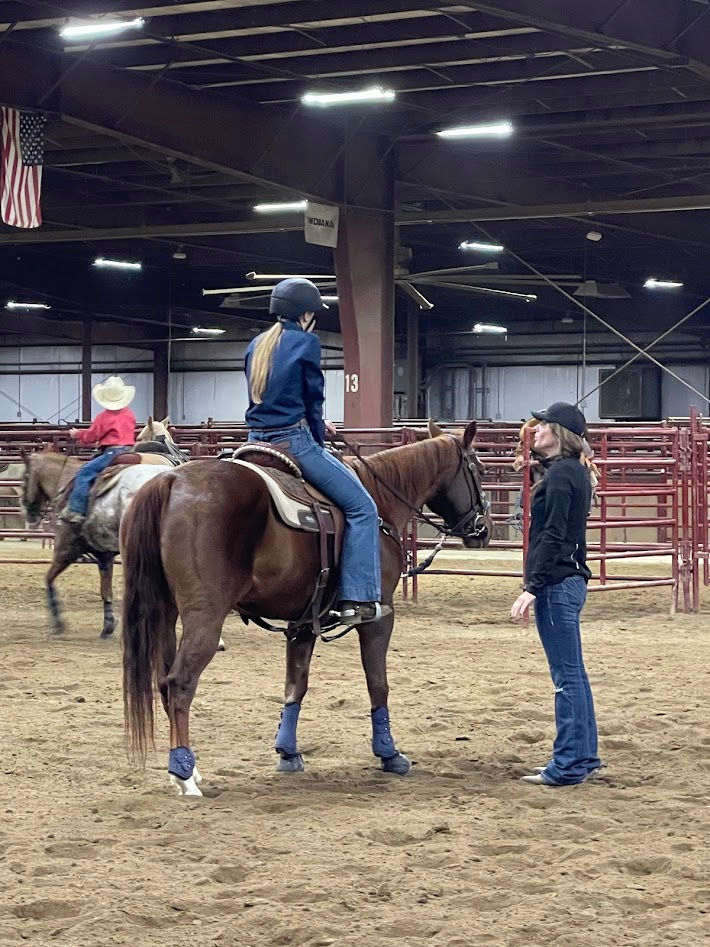
Do not attend lessons if your child is sick or showing symptoms of flu, cold, or seasonal illness.
Students must come prepared and properly dressed with layers, gloves, hats, and warm socks. If a rider is unprepared for the weather, they will not ride that day.
Riders must be healthy and prepared for their own safety, comfort, and lesson participation.
If your student has a fever, cough, upset stomach, or diarrhea, please cancel their lesson. They must be symptom-free for at least 24 hours before returning.
Please remember, we are a family too and want to stay healthy. A little caution goes a long way to keeping everyone well through the season.
Temperature and Safety Guidelines
Wind chill 20°F or below: Automatic cancellation (WeatherBug reading).
20–32°F wind chill: Lessons are tentative. Text first. We may hold walk/trot only sessions or switch to unmounted lessons (such as tack care, anatomy, or first aid) depending on weather and footing.
Unsafe footing (ice, deep snow, or frozen ground): Lessons may be canceled or modified.
As always—strong winds, blowing snow, subzero temperatures (below 20°F wind chill), and ice storms are all reasons for lesson changes or cancellations. We care about your safety not only at the barn but also getting to and from it. Our hill can be a challenge in winter, so please use caution. Be flexible and keep communication open.
This policy helps us keep our program running smoothly through the winter, ensuring that both riders and horses stay healthy, strong, and ready to perform. By following these guidelines, we can continue to train consistently and be prepared to compete at higher levels come spring and summer.
Thank you for helping us keep horses and riders safe this winter. Smart layering, good communication, and mindful horsemanship make all the difference. We’ll do our best to continue lessons safely whenever possible, but health and safety always come first.
Warmly,
Whitney
Dale Rosa Equine


Comments